
-
Table of Contents
The Role of Blockchain in Securing Academic Credentials

In today’s digital age, the need for secure and reliable systems to store and verify academic credentials has become increasingly important. With the rise of online education and remote learning, traditional methods of issuing and verifying academic credentials have proven to be inadequate. This is where blockchain technology comes into play.
What is blockchain?
Blockchain is a decentralized, distributed ledger technology that allows for secure record-keeping without the need for intermediaries such as banks or governments. It works by creating a chain of blocks that contain information, which cannot be altered or deleted once added to the chain.
- Immutable Records: One of the key features of blockchain technology is its immutability. Once data is recorded on the blockchain, it cannot be tampered with or changed. This makes it an ideal platform for storing sensitive information like academic credentials.
- Distributed Network: Unlike traditional databases that are stored in one central location, blockchains are distributed across a network of computers. This means there is no single point of failure, making it more secure against cyber attacks.
- Cryptographic Security: Each block on a blockchain contains a unique cryptographic code called a hash. Any changes made to the data within the block will result in a different hash being generated, alerting users to potential tampering attempts.
- Data Transparency: The transparent nature of blockchain technology allows all parties involved to view and verify data without needing permission from any centralized authority. This ensures trust among users as everyone has access to the same information.
- Ease of Verification: With traditional methods of verifying academic credentials, there is often a lengthy and tedious process involved. However, with blockchain technology, verification can be done quickly and easily by accessing the information stored on the blockchain.
- Cut Costs: Implementing blockchain technology for securing academic credentials can significantly reduce costs associated with printing and issuing physical certificates or transcripts. It also eliminates the need for third-party verification services, saving time and money.
The Challenges in Securing Academic Credentials
In today’s digital world, it has become increasingly easy to create fake documents or manipulate existing ones. This poses a significant challenge when it comes to securing academic credentials. Traditional methods such as paper certificates or transcripts are prone to fraud and can be easily forged or altered.
Moreover, storing sensitive data like personal information on centralized databases makes them vulnerable to cyber attacks. In recent years, we have seen several high-profile data breaches that have exposed millions of individuals’ personal information.
I personally believe that implementing blockchain technology in securing academic credentials is crucial in addressing these challenges effectively.
The Role of Blockchain in Securing Academic Credentials
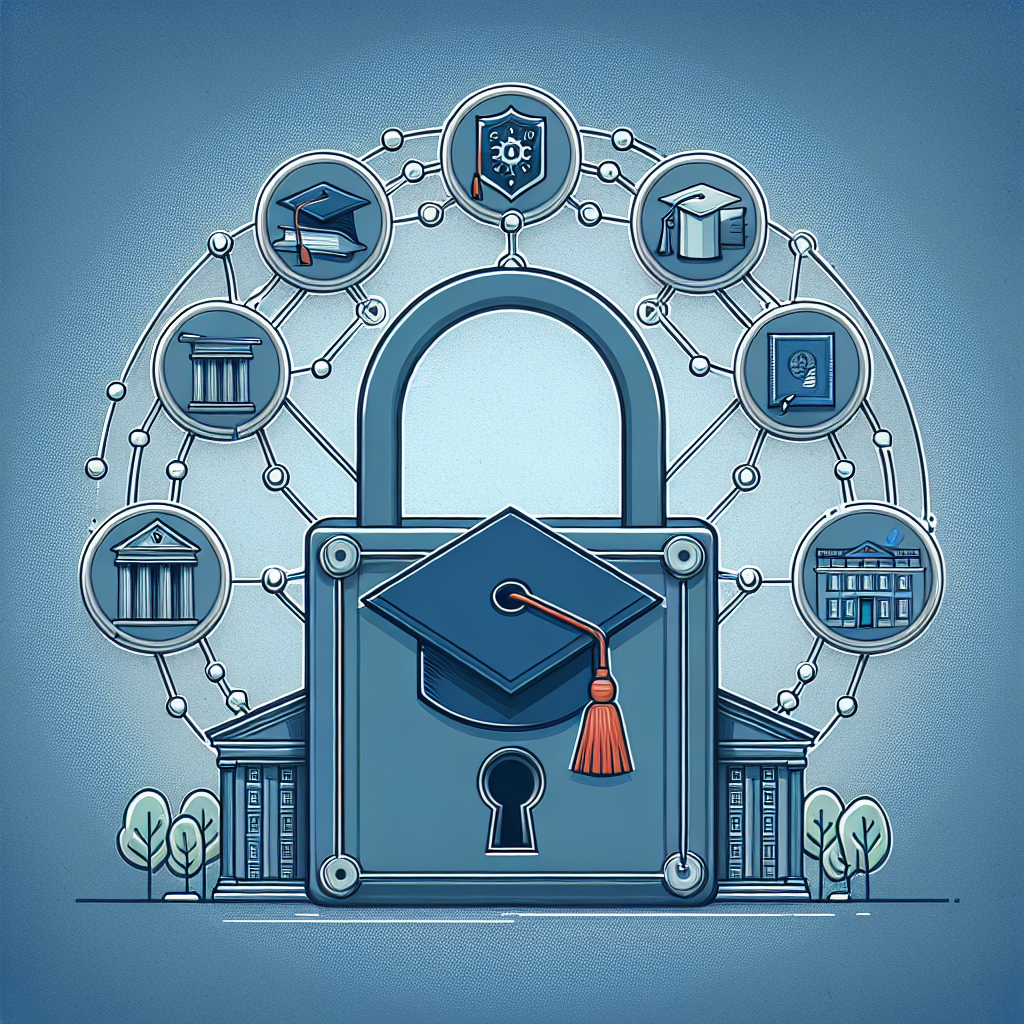
Blockchain technology offers an innovative solution to secure academic credentials while also addressing the challenges mentioned above. By leveraging its key features such as immutability, distributed network, cryptographic security, transparency, ease of verification and cost-effectiveness; blockchains provide a robust platform for storing and verifying educational records securely.
A Tamper-Proof System
The immutable nature of blockchain ensures that once an academic credential is recorded on the chain; it cannot be tampered with or deleted without leaving behind a traceable record. This eliminates any possibility of forgery or alteration by unauthorized parties.
Easier Verification Process
With blockchain technology, the verification process for academic credentials becomes more efficient and streamlined. Instead of relying on traditional methods such as contacting universities or third-party verification services, all necessary information can be accessed through the blockchain in a matter of seconds.
Data Privacy and Security
The decentralized nature of blockchains means that data is not stored in one central location, making it less vulnerable to cyber attacks. Additionally, with cryptographic security measures in place, sensitive data like personal information remains encrypted and can only be accessed by authorized parties.
Eliminating Fake Credentials
Fake academic credentials have become a widespread issue in recent years. By implementing blockchain technology, educational institutions can ensure that only legitimate records are recorded on the chain. This eliminates the possibility of fake degrees or certificates being issued.
In Conclusion
The use of blockchain technology has already started to revolutionize how we store and verify academic credentials. Its secure and transparent nature provides a much-needed solution to address challenges faced by traditional methods while also ensuring privacy and efficiency. As more industries adopt this innovative technology, we can expect to see significant improvements in securing important documents like academic credentials.
I hope this article has shed some light on the role of blockchain technology in securing academic credentials. As someone who values education greatly, I believe it is essential to embrace new technologies that enhance its integrity and reliability.